Bill's Plumbing and Sewer

Blog / Bill's Plumbing & Sewer Blog

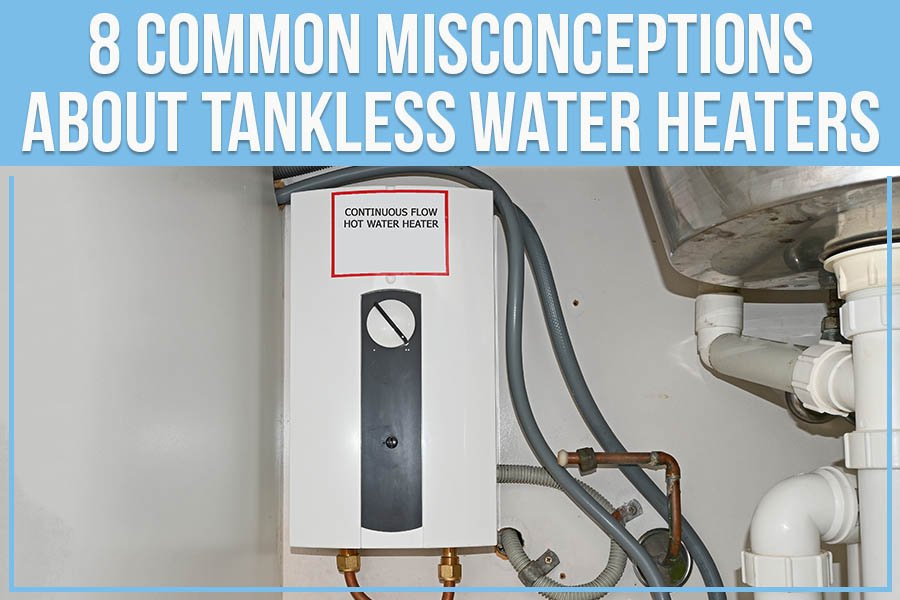
8 Common Misconceptions About Tankless Water Heaters

8 common misconceptions

Key Takeaways:

  • Installing a tankless water heater is among the most energy-efficient decisions you can make for your home this year.
  • Tankless heaters are fast, offer precise temp control, require minimal water heater maintenance & are easy to house in constricted spaces.
  • They, however, require specialized labor for installation purposes. One can't DIY their way through storage to tankless retrofit since the housing, connections, & power requirements vary.
  • If you want to boost the value of your estate, you can always opt for a tankless heater installation for higher ROI.
  • There are a lot of discouraging & misleading water heater myths about tankless units, but they are borne of folks who have yet to discover the practical benefits of installing one.
  • Bill's Plumbing & Sewer carries the full range of Rheem heaters and will source A.O. Smith & Bradford White heaters upon request!

If you live in a house or operate a small business, chances are you've considered installing a tankless water heater. It is convenient during the winter when you need a hot shower in the morning before hitting the office commute. However, there are still some misconceptions about them.

Today's blog post by Bill's Plumbing & Sewer, serving Deerfield, FL, will dispel some of the most common tankless water heater myths. After reading this post, you'll know everything you need to make an informed decision about whether or not installing a tankless water heater is right for you.

Myth 1: You Can Swap Storage & Tankless Modes With Ease.

Wrong!

The venting layout, electrical requirements & gas needs of storage in a tankless water heater differ. You can't retrofit or swap between the two unless you have a thorough rework at the hands of a professional. It is best to have your water heater replacement done by someone who understands the layout difference.

Myth 2: Anyone Can DIY Install a Tankless Water Heater

If you are a trained electrician or a plumbing technician, you might be able to do so. Installing a tankless water heater requires skills to sell the right connections to the electrical outlets, make the right gas connections, and adhere to tenancy and area codes. Even if you go DIY, you could make a few mistakes affecting the tankless unit.

DIY is better managed with storage water heater units if you know what mistakes to avoid! Read here!

Myth 3: A Tankless Water Heater Delivers Instant Hot Water.

That is also a flawed perception. The tankless water heater heats water at a far slower rate than a storage one. If the unit stalled in the place of your previous heater, it will take a few seconds for the unit to heat up. Then the heater thermostat will determine how high a temperature it needs based on the flow rate set by the user.

Myth 4: All Tankless Water Heaters Come with The Same Functions

There are various models of tankless heaters. They also come with their ratings for efficiency, cost-effectiveness & ease-of-installation. So, you can choose a heater that best suits your budget or serves you the desired features. The more high-end a tankless water heater will be, the more features & auto-mated functions it can offer.

Myth 5: You Don't Need a Permit To Install A Tankless Water Heater

All items in the category of intensive home appliances in Illinois require a licensed installer. Since a tankless water heater is a category III appliance, it will require specialized installation and connecting materials. Therefore, you might also need to secure a tankless water heater replacement permit.

Now for a few more slightly ridiculous myths on tankless heaters.

Myth 6: They Have High Operating Costs

Other myths about tankless heaters tend to be expensive and rack up quite a bill by the end of the month. Contrary to that belief, these water heaters offer optimized energy usage, leading to curbed utility bills that don't dent your bank balance. You might as well save up to 1/5th of your total energy bills.

Myth 7: These Heaters Lack Thermostat Control

The first myth addressed the myth of the slow rate of water heating in these heaters, but this one cites the lack of thermostatic control. These heaters may be small, but they pack in quite a punch regarding heating and temperature control. So, you will get the water heated to the temperatures you need at the right time.

Myth 8: Tankless Water Heaters Have a Limited Water Supply

That has to be the most ridiculous & discouraging myth for anyone seeking to enhance their energy use optimization & curb their bills. Tankless water heaters do not work with a storage unit. They heat the water directly from the water feed and can deliver it on demand. There is no reason this myth should rob you of an ideal opportunity to keep your mornings warm & your bills cool!

Why Should You Get a Tankless Water Heater?

If you have gone through these myths, you will realize that the utility of swapping for a tankless installation is manifold.

  • You have an 'on-demand' supply of lukewarm, warm, hot water; you name it!
  • Your gas bills are not subject to the ongoing heating costs that come with owning & operating a storage water heater.
  • They are space efficient. A storage water heater needs at least a 12-square-foot area for installation. A tankless variant will take up less and can be mounted too!
  • Tankless water heaters are not subject to the rampant caulking, sedimentation & corrosive issues in storage units.
  • Unlike storage water heaters, going tankless protects your home from the possibility of flooding in case the heater develops a leak.
  • Suppose you want to enhance the ROI of your estate on resale or bump up the tenancy rates. In that case, you can opt for a tankless water heater installation.

Let's Go Tankless Water Heating with Bill!

At Bill's Plumbing & Sewer, serving Deerfield, IL, you can come in anytime or call us for any plumbing-related emergency, query, installation & fix, and we'll be there. Our professionals are adept at trivial-to-intensive plumbing tasks in the region. We also do water heater maintenance in addition to replacement & repair.

Call us if you need assistance with sourcing & installing a tankless water heater. We offer a full range of Rheem heaters, and we can also source A.O. Smith & Bradford White heaters upon request!

Don't forget to secure a free estimate on our services today!
Posted in:

Related Posts

Commercial plumbing experts in Northbrook, IL

Top Plumbing Upgrades for Local Businesses

Plumbing might not be the first thing that comes to your mind when you think about running your business, but it's essential to your daily operations, customer satisfaction, and thus your bottom line. Talk to your Northbrook, IL commercial plumbing services professional to find out what options will be best for your space and keep reading for some general upgrades that are often helpful for a business. Top Plumbing Upgrades for Local Businesses more Water-Efficient Fixtures A simple but huge upgrade is to replace any standard water fixtures you have with water-efficient models. This might be sensor-activated faucets in a bathroom, dual-flush toilets with options for a full or partial flush, and fixtures that concentrate a water stream at a sink or shower so you can still get strong cleaning power but with less water usage. Items like this can enormously cut your water usage while still performing as they need to. Customers are often pleased by options like this, too, because fixtures that don't have to be touched promote hygiene by minimizing contact. Even better? Upgrading to these options could qualify you for rebates through programs like EPA WaterSense. Backflow Prevention Contaminated water poses a serious threat to any business. You're talking about the possibility of health issues, damage to your reputation, and even legal and regulatory penalties. A simple backflow prevention device, like a reduced pressure zone valve or double check assembly, will keep dirty water from irrigation systems or industrial processes out of the clean water supply. This is especially good for any business dealing with serious chemicals, such as an auto repair shop. Upgrading Pipes and Drainage Systems For any business in an older building, it's always worth investigating whether aging pipes and bad drainage are causing leaks that waste your money, clogs and backups that disrupt your day, and the constant need for expensive repairs. While it is an investment to upgrade your pipes and drains, transitioning to corrosion-resistant materials will fix these constant problems and also extend the lifespan of the entire system. If you use a lot of water, such as in a restaurant business, we can also install oversized drain lines that will improve the flow and reduce the likelihood that you're going to have an overflow during your busiest periods. Smart Technology It's 2025, and no home or business should be without a smart leak detection system. These systems can monitor your water usage and instantly let you know if anything is different from normal. This can protect you from small hidden leaks that not only waste your money but could also cause structural damage over time, and you can even get devices with automatic shut-off features that will stop the water flow if something big happens when no one is there. Northbrook, IL Commercial Plumbing Services To find out how your business could benefit from the right plumbing upgrades, contact Bill's Plumbing and Sewer or call us at 847-673-3045. We serve all of the larger Cook County area.

we do water line installation without digging.

How Horizontal Boring Can Save Your Yard During Plumbing Work in Northbrook, IL

Northbrook homes are known for mature trees, established landscaping, and well-maintained yards. When a main water line or sewer pipe fails, many homeowners assume the repair will mean tearing up the lawn, driveway, or garden beds. Traditionally, that was true. Today, horizontal boring offers a way to replace underground pipes without destroying the property you’ve invested years maintaining. Bill’s Plumbing and Sewer uses horizontal boring, also called trenchless boring or directional drilling, to complete major plumbing work while keeping surface disruption to a minimum. How Horizontal Boring Works more Horizontal boring allows plumbers to install or replace underground pipes without digging a long trench across the yard. Instead of excavating the entire path, the work is done almost entirely below ground. The process starts by setting up a compact drilling rig in a small access area, usually near the street or foundation. A pilot hole is drilled underground at a controlled angle, following the path of the existing pipe or a new route that avoids obstructions. Once the pilot hole reaches the endpoint, a larger reamer is pulled back through the soil while the new pipe is installed at the same time. In most cases, the job requires only two small access points. Everything between those points stays intact. Why Horizontal Boring Makes Sense for Northbrook Properties Preserving Landscaping and Lawns Many properties throughout Cook County feature sloped yards, decorative stonework, irrigation systems, and established plantings. Traditional trenching cuts through all of it. Restoring a yard after excavation can add thousands of dollars to a repair project. Horizontal boring avoids that damage and helps protect both landscaping and soil stability. Protecting Mature Trees Large trees are common throughout Northbrook neighborhoods, and their root systems often spread wide and shallow. Open trench excavation severs those roots and can permanently damage or kill a tree. Horizontal boring typically runs several feet below the root zone, reducing the risk to trees that would otherwise be lost. Faster, Cleaner Projects Trenchless boring usually takes less time than traditional digging. There is less soil to manage, fewer disruptions, and less risk of delays due to weather. In a region where rain and seasonal ground conditions can complicate excavation, minimizing surface work keeps projects moving. When Horizontal Boring May Not Be the Right Option While horizontal boring is a strong solution in many situations, it is not always the best choice. Extremely rocky soil, unusually long pipe runs, or services with multiple sharp turns can make boring more complex or less cost-effective. Very shallow pipes located directly beneath concrete may still require limited excavation. Before recommending trenchless work, Bill’s Plumbing and Sewer evaluates the property, soil conditions, and pipe layout. In some cases, a small test pit may be needed to confirm whether boring is the right approach. Choosing the Right Method for Your Plumbing Repair Not every plumbing problem requires trenchless technology, but when it does, the benefits are significant. Horizontal boring allows critical water line and sewer repairs to be completed while protecting the yard, trees, and hardscaping that make Cook County homes valuable and enjoyable. To find out whether horizontal boring is the right solution for your water or sewer line issue, contact Bill’s Plumbing and Sewer in Northbrook, IL. Our team will evaluate your situation and explain the best option for your property before work begins.

HVAC troubleshooting in Northbrook

How to Repair a Furnace: A Practical Guide for Homeowners

When a furnace stops working, panic usually follows—especially during a Northbrook winter. Many breakdowns come from a few predictable issues, and some basic checks can be done safely before calling for professional furnace repair. This guide walks you through simple troubleshooting steps and explains when it is time to contact Bill’s Plumbing & Sewer, your local expert for furnace repair near me in Northbrook, IL. Whether the problem is a noisy system, poor airflow, or a furnace that will not start at all, this tutorial helps you understand what is happening and what you can do about it—up to the point where a trained furnace repair technician should step in. Start with the Basics: Simple Furnace Troubleshooting more Before assuming the worst, it makes sense to rule out small, common issues. Many calls for heating furnace repair begin with problems that do not require major work. Check the Thermostat Confirm the thermostat is set to HEAT. Increase the set temperature by a few degrees. Replace the batteries if the display is dim or blank. A large share of “no heat” situations start and end at the thermostat. Verify the Furnace Power Switch Most furnaces have a wall switch that looks like a regular light switch. If it is off, the furnace will not run. Turn it on and give the system a few minutes to respond. Inspect the Air Filter A clogged filter can overheat the system, reduce airflow, and trigger a shutdown. If the filter is dirty, replace it. This simple step protects the system and often restores normal operation without further furnace repair. Try a Single Reset Some gas and oil furnaces have a reset button that will lock out the burner for safety. Press the reset button only once. If the furnace still will not run, avoid repeated resets and move on to deeper diagnosis or professional help. Common Furnace Problems and What They Mean Not every problem is safe to handle on your own, but understanding the most common failure points helps you make better decisions. These are typical furnace parts that often require repair or replacement: Furnace ignitor Flame sensor Draft inducer motor Furnace blower motor Limit switch Burner assembly Furnace control board Heat exchanger Gas valve Furnace capacitor Ignitor Failure If the ignitor fails, a gas furnace will not light. You may hear clicking but see no flame. Ignitors are fragile and run at very high temperatures. This is not a good candidate for DIY work; replacement is best handled by a qualified gas furnace repair technician. Blower Motor Problems Weak airflow, no airflow, humming sounds, or a burning smell can point to a failing blower motor. Furnace blower motor repair often involves electrical testing and motor replacement. This type of work should be done by a professional due to the electrical and mechanical risks involved. Dirty Flame Sensor The flame sensor confirms that the burner has lit. If it becomes coated with residue, the furnace may light briefly and then shut off. Basic cleaning procedure: Turn off power to the furnace. Remove the flame sensor carefully. Gently clean it with fine steel wool. Reinstall and restore power. If the furnace now stays on, the issue was likely limited to the sensor. If not, professional heating furnace repair is the next step. Oil Furnace Issues With oil furnace repair, clogged nozzles, dirty burners, or fuel delivery issues are common. You can confirm the oil tank is not empty and change an accessible filter, but nozzle cleaning, burner adjustment, and combustion testing require specialized tools and training. Those jobs belong in the hands of an experienced technician. How Much Does Furnace Repair Cost? The f urnace repair cost depends on the failed part and the complexity of the work. Minor repairs often fall in a lower price range, while major repairs such as blower motor replacement, control board replacement, or extensive gas furnace repair can be more costly. Oil systems can be slightly more expensive to service than basic gas furnaces, especially if burner components or venting need work. When you search for furnace repair near me or gas furnace repair near me, the most important factor is choosing someone who can diagnose the issue correctly the first time. A misdiagnosed problem can quickly make any repair more expensive than it needs to be. When to Call a Furnace Repair Technician Some issues are reasonable to inspect on your own. Others call for professional help to keep your home safe. A licensed furnace repair technician should handle the problem when: You smell gas or suspect a leak. The furnace short-cycles or turns on and off rapidly. The blower never turns on or never turns off. You hear grinding, scraping, or metal-on-metal noises. The breaker trips when the furnace runs. There is visible water around the base of the furnace. You suspect a cracked heat exchanger or carbon monoxide risk. These are not simple fixes. They involve combustion, fuel lines, high voltage, or venting. In these cases, the right move is to bring in a company that regularly handles heating furnace repair and full system diagnostics. Who to Call for Furnace Repair in Northbrook, IL When the problem goes beyond filter changes and thermostat resets, Bill’s Plumbing & Sewer is the team to contact. If you are wondering who can repair your furnace safely, efficiently, and honestly, our technicians provide complete furnace repair services, including: Emergency furnace repair in Northbrook and surrounding areas Gas furnace repair and safety checks Oil furnace repair and burner service Blower motor diagnostics and replacement Ignitor and flame sensor replacement Annual maintenance to reduce breakdowns and extend system life Furnace replacement when repair is no longer cost-effective Our role is to take over when the repair becomes too technical, too risky, or simply too frustrating to handle alone. We explain what failed, what it will take to correct it, and whether repair or replacement is the better investment for your home. When the Furnace Gets Complicated, Bill’s Plumbing & Sewer Can Help Basic troubleshooting can solve a surprising number of minor furnace problems. When the issue becomes mechanical, electrical, or fuel-related, it is time to call a professional. If your system will not run, is making concerning noises, or keeps shutting down, our team is ready to help. For reliable furnace repair and heating furnace repair in Northbrook, IL, contact Bill’s Plumbing & Sewer today. We are here to restore your heat, protect your home, and keep your family comfortable all season long.