Bill's Plumbing and Sewer

Blog / Bill's Plumbing & Sewer Blog

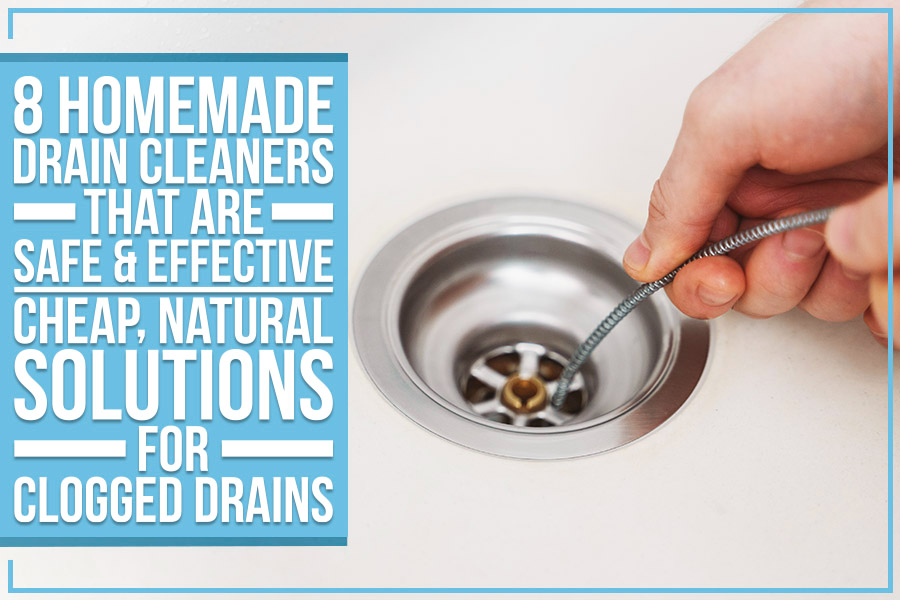
8 Homemade Drain Cleaners That Are Safe & Effective: Cheap, Natural Solutions For Clogged Drains

8 homemade drain cleaners

Drain cleaners can be a lifesaver when your sink or tub is backed up and you need to get the water moving again. However, many commercial drain cleaners are harsh and toxic and can damage your plumbing if misused.

We've found some safe and easy homemade drain cleaners that you can use to clear obstructions. Try one of these eight homemade drain cleaners that are safe for your plumbing and won't cause any damage.​ Keep reading for some helpful tips.

For your free drain quote, contact us online, or give us a call at 847-673-3045 today!

1. Salt and Baking Soda

Salt is a cost-effective alternative that works well for minor clogs. Mixing half a cup of table salt with baking soda and pouring it down the drain before adding boiling water can help break down grease and debris. This method is particularly useful for kitchen sinks, where food residue and oils contribute to blockages.

  1. Pour ½ cup of baking soda down the drain, 
  2. Pour ½ cup of salt. 
  3. Then, add boiling water to help flush away the obstruction.

2. Lemon Juice

Lemons are not only great for flavoring food, but they can also help clear clogged drains. For those concerned about chemical exposure, citrus-based cleaners provide a natural and biodegradable alternative. Lemon or orange peels blended with vinegar create an acidic yet non-toxic cleaner that helps break down buildup and leaves behind a fresh scent.

  1. Pour 1 cup of lemon juice down the drain and let it sit for an hour. 
  2. Then, run hot water down the drain to flush away the obstruction.

3. Vinegar and Baking Soda

For those looking for a cheap drain cleaner, one of the most affordable and effective solutions is a simple baking soda and vinegar combination. This mixture creates a fizzy reaction that breaks down buildup inside pipes, helping to resolve drain backups before they become a major issue. To use this method, pour one cup of baking soda down the drain, followed by one cup of apple cider vinegar. Let the solution sit for 15 minutes before flushing it with hot water. The foaming action helps dislodge minor clogs and deodorizes drains, making it a go-to solution for routine maintenance.

  1. Pour 1 cup of baking soda down the drain.
  2. Add 1 cup of vinegar and let the mixture sit for 30 minutes.
  3. Add boiling water to help flush away the obstruction.
  4. Run hot water down the drain to clear any remaining residue.

4. Salt and Boiling Water

  1. Pour ½ cup of salt down the drain.
  2. Add boiling water and let the mixture sit for 15 minutes.
  3. Run hot water down the drain to flush away the obstruction.

5. Cream of Tartar

It is an excellent option if you have a clog that's preventing water from draining at all.

  1. Pour 1 cup of cream of tartar down the drain.
  2. Add boiling water and let the mixture sit for 30 minutes.
  3. Run hot water to flush away the obstruction.

6. Enzyme Drain Cleaners

Enzyme-based cleaners are organic, introducing beneficial bacteria to digest organic material in pipes. They are pet-safe and work best when used regularly as a preventive measure. Unlike chemical cleaners that can corrode pipes and pose risks to pets and humans, enzyme-based solutions provide a long-term, non-toxic way to maintain drainage systems.

  1. Pour the enzyme drain cleaner down the drain.
  2. Add hot water and let the mixture sit for 30 minutes.
  3. Run hot water down the drain to flush away the obstruction.

7. Wire Hook

If you can see the clog but can't reach it, a wire hook can help.

  1. Straighten out a wire hanger and create a small hook at the end.
  2. Insert the hook into the drain and try to snag the clog.
  3. Pull the clog out of the drain and dispose of it properly.

8. Rubber Plunger

Last but not least, a tool you've probably seen for unclogging toilets. A rubber plunger is also classic tool for freeing drains by pushing/pulling clogs until they're dislodged.

  1. Ensure enough water is in the sink or tub to cover the plunger.
  2. Place the plunger over the drain and push and pull it up and down.
  3. Run hot water down the drain to flush away any remaining obstruction.

Keeping Drains Clear Without Harsh Chemicals

Using harsh chemical cleaners to clear clogged drains may seem like a quick fix, but without the right method it comes with significant drawbacks. Many commercial drain cleaners contain highly corrosive ingredients such as sulfuric acid or sodium hydroxide, which can erode pipes over time, leading to leaks and costly repairs. Additionally, these toxic chemicals pose serious health risks if inhaled or if they come into contact with skin or eyes—which is dangerous especially in households with children or pets.

Chemical drain cleaners can also have a negative impact on the environment. When these substances are rinsed down the drain, they eventually make their way into local water systems, where they can contribute to water pollution and harm aquatic life. Unlike biodegradable homemade drain cleaners, which break down naturally and safely, chemical-based solutions introduce toxic compounds that persist in the environment.

For tough clogs that homemade solutions cannot resolve, a professional plumber may be necessary. However, incorporating these natural drain-cleaning methods into regular maintenance can help avoid expensive repairs and keep drains flowing smoothly year-round.

Hair In the Shower Drain?

One of the most common causes of drain blockages is the buildup of hair in the drain. If strands accumulate over time, they mix with soap residue and other debris, leading to slow drainage and eventual clogs. To avoid this issue, consider using drain covers in sinks and showers to catch loose hairs before they enter the plumbing.

Regular maintenance also keeps drains clear. Running hot water down the drain after each use can help wash away small debris, and using a homemade drain cleaner once a month can help dissolve any buildup before it turns into a clog. Taking these small steps can save time and money while keeping your plumbing system in top condition.

If you're looking for a professional plumbing contractor near you, Bill's Plumbing & Sewer is here to help. We offer comprehensive plumbing services in Winnetka and the surrounding area, including expert drain cleaning.

Contact us today for a free estimate on our services.
Posted in:

Related Posts

Commercial plumbing experts in Northbrook, IL

Top Plumbing Upgrades for Local Businesses

Plumbing might not be the first thing that comes to your mind when you think about running your business, but it's essential to your daily operations, customer satisfaction, and thus your bottom line. Talk to your Northbrook, IL commercial plumbing services professional to find out what options will be best for your space and keep reading for some general upgrades that are often helpful for a business. Top Plumbing Upgrades for Local Businesses more Water-Efficient Fixtures A simple but huge upgrade is to replace any standard water fixtures you have with water-efficient models. This might be sensor-activated faucets in a bathroom, dual-flush toilets with options for a full or partial flush, and fixtures that concentrate a water stream at a sink or shower so you can still get strong cleaning power but with less water usage. Items like this can enormously cut your water usage while still performing as they need to. Customers are often pleased by options like this, too, because fixtures that don't have to be touched promote hygiene by minimizing contact. Even better? Upgrading to these options could qualify you for rebates through programs like EPA WaterSense. Backflow Prevention Contaminated water poses a serious threat to any business. You're talking about the possibility of health issues, damage to your reputation, and even legal and regulatory penalties. A simple backflow prevention device, like a reduced pressure zone valve or double check assembly, will keep dirty water from irrigation systems or industrial processes out of the clean water supply. This is especially good for any business dealing with serious chemicals, such as an auto repair shop. Upgrading Pipes and Drainage Systems For any business in an older building, it's always worth investigating whether aging pipes and bad drainage are causing leaks that waste your money, clogs and backups that disrupt your day, and the constant need for expensive repairs. While it is an investment to upgrade your pipes and drains, transitioning to corrosion-resistant materials will fix these constant problems and also extend the lifespan of the entire system. If you use a lot of water, such as in a restaurant business, we can also install oversized drain lines that will improve the flow and reduce the likelihood that you're going to have an overflow during your busiest periods. Smart Technology It's 2025, and no home or business should be without a smart leak detection system. These systems can monitor your water usage and instantly let you know if anything is different from normal. This can protect you from small hidden leaks that not only waste your money but could also cause structural damage over time, and you can even get devices with automatic shut-off features that will stop the water flow if something big happens when no one is there. Northbrook, IL Commercial Plumbing Services To find out how your business could benefit from the right plumbing upgrades, contact Bill's Plumbing and Sewer or call us at 847-673-3045. We serve all of the larger Cook County area.

we do water line installation without digging.

How Horizontal Boring Can Save Your Yard During Plumbing Work in Northbrook, IL

Northbrook homes are known for mature trees, established landscaping, and well-maintained yards. When a main water line or sewer pipe fails, many homeowners assume the repair will mean tearing up the lawn, driveway, or garden beds. Traditionally, that was true. Today, horizontal boring offers a way to replace underground pipes without destroying the property you’ve invested years maintaining. Bill’s Plumbing and Sewer uses horizontal boring, also called trenchless boring or directional drilling, to complete major plumbing work while keeping surface disruption to a minimum. How Horizontal Boring Works more Horizontal boring allows plumbers to install or replace underground pipes without digging a long trench across the yard. Instead of excavating the entire path, the work is done almost entirely below ground. The process starts by setting up a compact drilling rig in a small access area, usually near the street or foundation. A pilot hole is drilled underground at a controlled angle, following the path of the existing pipe or a new route that avoids obstructions. Once the pilot hole reaches the endpoint, a larger reamer is pulled back through the soil while the new pipe is installed at the same time. In most cases, the job requires only two small access points. Everything between those points stays intact. Why Horizontal Boring Makes Sense for Northbrook Properties Preserving Landscaping and Lawns Many properties throughout Cook County feature sloped yards, decorative stonework, irrigation systems, and established plantings. Traditional trenching cuts through all of it. Restoring a yard after excavation can add thousands of dollars to a repair project. Horizontal boring avoids that damage and helps protect both landscaping and soil stability. Protecting Mature Trees Large trees are common throughout Northbrook neighborhoods, and their root systems often spread wide and shallow. Open trench excavation severs those roots and can permanently damage or kill a tree. Horizontal boring typically runs several feet below the root zone, reducing the risk to trees that would otherwise be lost. Faster, Cleaner Projects Trenchless boring usually takes less time than traditional digging. There is less soil to manage, fewer disruptions, and less risk of delays due to weather. In a region where rain and seasonal ground conditions can complicate excavation, minimizing surface work keeps projects moving. When Horizontal Boring May Not Be the Right Option While horizontal boring is a strong solution in many situations, it is not always the best choice. Extremely rocky soil, unusually long pipe runs, or services with multiple sharp turns can make boring more complex or less cost-effective. Very shallow pipes located directly beneath concrete may still require limited excavation. Before recommending trenchless work, Bill’s Plumbing and Sewer evaluates the property, soil conditions, and pipe layout. In some cases, a small test pit may be needed to confirm whether boring is the right approach. Choosing the Right Method for Your Plumbing Repair Not every plumbing problem requires trenchless technology, but when it does, the benefits are significant. Horizontal boring allows critical water line and sewer repairs to be completed while protecting the yard, trees, and hardscaping that make Cook County homes valuable and enjoyable. To find out whether horizontal boring is the right solution for your water or sewer line issue, contact Bill’s Plumbing and Sewer in Northbrook, IL. Our team will evaluate your situation and explain the best option for your property before work begins.

HVAC troubleshooting in Northbrook

How to Repair a Furnace: A Practical Guide for Homeowners

When a furnace stops working, panic usually follows—especially during a Northbrook winter. Many breakdowns come from a few predictable issues, and some basic checks can be done safely before calling for professional furnace repair. This guide walks you through simple troubleshooting steps and explains when it is time to contact Bill’s Plumbing & Sewer, your local expert for furnace repair near me in Northbrook, IL. Whether the problem is a noisy system, poor airflow, or a furnace that will not start at all, this tutorial helps you understand what is happening and what you can do about it—up to the point where a trained furnace repair technician should step in. Start with the Basics: Simple Furnace Troubleshooting more Before assuming the worst, it makes sense to rule out small, common issues. Many calls for heating furnace repair begin with problems that do not require major work. Check the Thermostat Confirm the thermostat is set to HEAT. Increase the set temperature by a few degrees. Replace the batteries if the display is dim or blank. A large share of “no heat” situations start and end at the thermostat. Verify the Furnace Power Switch Most furnaces have a wall switch that looks like a regular light switch. If it is off, the furnace will not run. Turn it on and give the system a few minutes to respond. Inspect the Air Filter A clogged filter can overheat the system, reduce airflow, and trigger a shutdown. If the filter is dirty, replace it. This simple step protects the system and often restores normal operation without further furnace repair. Try a Single Reset Some gas and oil furnaces have a reset button that will lock out the burner for safety. Press the reset button only once. If the furnace still will not run, avoid repeated resets and move on to deeper diagnosis or professional help. Common Furnace Problems and What They Mean Not every problem is safe to handle on your own, but understanding the most common failure points helps you make better decisions. These are typical furnace parts that often require repair or replacement: Furnace ignitor Flame sensor Draft inducer motor Furnace blower motor Limit switch Burner assembly Furnace control board Heat exchanger Gas valve Furnace capacitor Ignitor Failure If the ignitor fails, a gas furnace will not light. You may hear clicking but see no flame. Ignitors are fragile and run at very high temperatures. This is not a good candidate for DIY work; replacement is best handled by a qualified gas furnace repair technician. Blower Motor Problems Weak airflow, no airflow, humming sounds, or a burning smell can point to a failing blower motor. Furnace blower motor repair often involves electrical testing and motor replacement. This type of work should be done by a professional due to the electrical and mechanical risks involved. Dirty Flame Sensor The flame sensor confirms that the burner has lit. If it becomes coated with residue, the furnace may light briefly and then shut off. Basic cleaning procedure: Turn off power to the furnace. Remove the flame sensor carefully. Gently clean it with fine steel wool. Reinstall and restore power. If the furnace now stays on, the issue was likely limited to the sensor. If not, professional heating furnace repair is the next step. Oil Furnace Issues With oil furnace repair, clogged nozzles, dirty burners, or fuel delivery issues are common. You can confirm the oil tank is not empty and change an accessible filter, but nozzle cleaning, burner adjustment, and combustion testing require specialized tools and training. Those jobs belong in the hands of an experienced technician. How Much Does Furnace Repair Cost? The f urnace repair cost depends on the failed part and the complexity of the work. Minor repairs often fall in a lower price range, while major repairs such as blower motor replacement, control board replacement, or extensive gas furnace repair can be more costly. Oil systems can be slightly more expensive to service than basic gas furnaces, especially if burner components or venting need work. When you search for furnace repair near me or gas furnace repair near me, the most important factor is choosing someone who can diagnose the issue correctly the first time. A misdiagnosed problem can quickly make any repair more expensive than it needs to be. When to Call a Furnace Repair Technician Some issues are reasonable to inspect on your own. Others call for professional help to keep your home safe. A licensed furnace repair technician should handle the problem when: You smell gas or suspect a leak. The furnace short-cycles or turns on and off rapidly. The blower never turns on or never turns off. You hear grinding, scraping, or metal-on-metal noises. The breaker trips when the furnace runs. There is visible water around the base of the furnace. You suspect a cracked heat exchanger or carbon monoxide risk. These are not simple fixes. They involve combustion, fuel lines, high voltage, or venting. In these cases, the right move is to bring in a company that regularly handles heating furnace repair and full system diagnostics. Who to Call for Furnace Repair in Northbrook, IL When the problem goes beyond filter changes and thermostat resets, Bill’s Plumbing & Sewer is the team to contact. If you are wondering who can repair your furnace safely, efficiently, and honestly, our technicians provide complete furnace repair services, including: Emergency furnace repair in Northbrook and surrounding areas Gas furnace repair and safety checks Oil furnace repair and burner service Blower motor diagnostics and replacement Ignitor and flame sensor replacement Annual maintenance to reduce breakdowns and extend system life Furnace replacement when repair is no longer cost-effective Our role is to take over when the repair becomes too technical, too risky, or simply too frustrating to handle alone. We explain what failed, what it will take to correct it, and whether repair or replacement is the better investment for your home. When the Furnace Gets Complicated, Bill’s Plumbing & Sewer Can Help Basic troubleshooting can solve a surprising number of minor furnace problems. When the issue becomes mechanical, electrical, or fuel-related, it is time to call a professional. If your system will not run, is making concerning noises, or keeps shutting down, our team is ready to help. For reliable furnace repair and heating furnace repair in Northbrook, IL, contact Bill’s Plumbing & Sewer today. We are here to restore your heat, protect your home, and keep your family comfortable all season long.