Bill's Plumbing and Sewer

Blog / Water Systems

Our 4-Step Water Damage Action Checklist

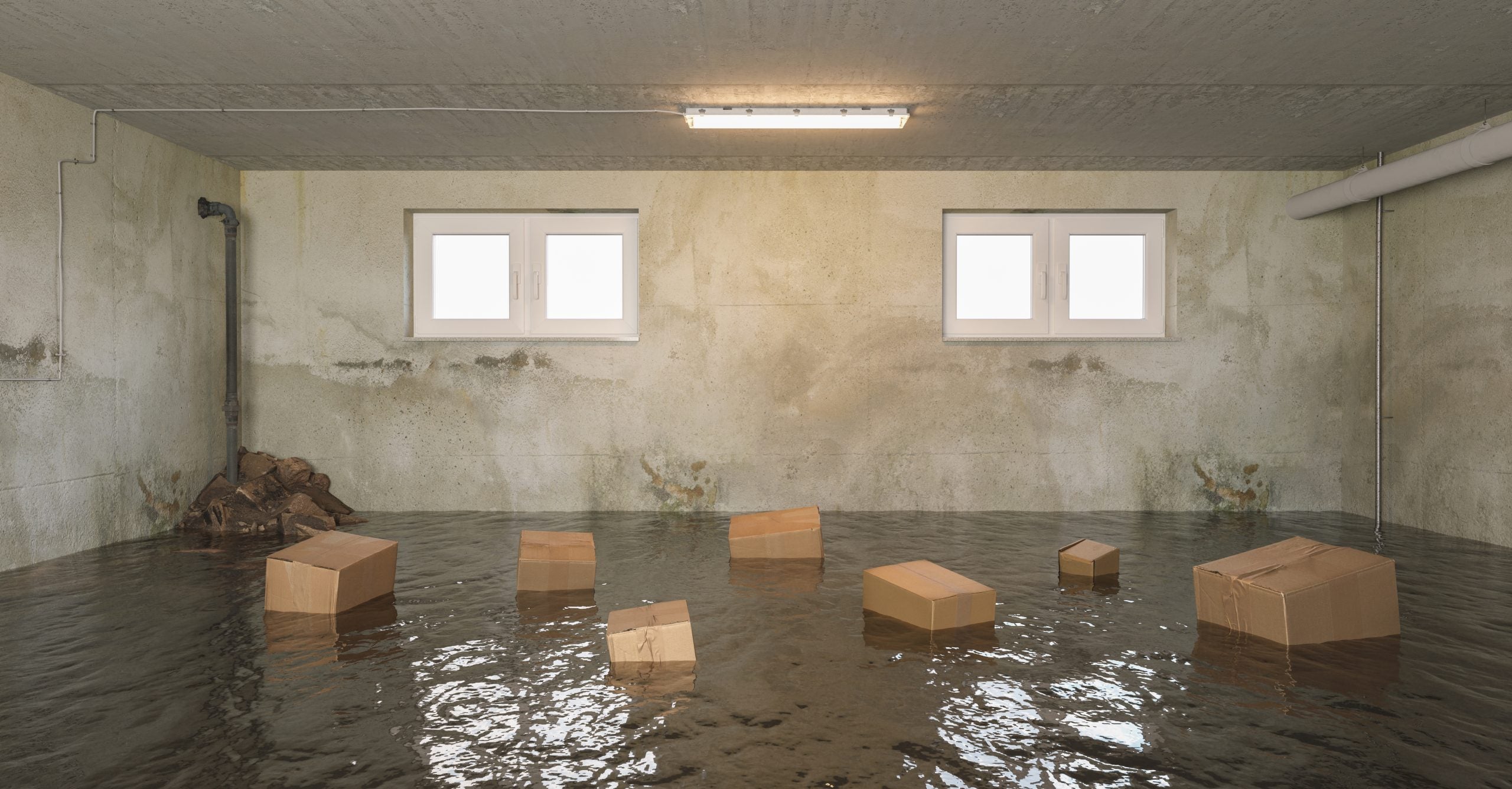
Flooded,Basement,Of,The,House,With,Wet,Cardboard,Boxes,In

1. Locate and Stop the Water Source

For example, if a plumbing issue is the cause, quickly shut off the water supply at the main valve. This action will help minimize further damage to your home.

If you can't stop the water supply, minimize the places water can enter your home. Divert water away from sensitive areas, especially electrical outlets and appliances. If you can't safely reach the breaker box, use a dry, non-conductive object (like a wooden broom handle) to turn off the power. If needed, consider using a tarp or sandbags to redirect the water. The sooner the water source is contained, the less extensive the damage will be.

2. Move Belongings to Safety

With the water source controlled, your next step is to protect your possessions. Water damage can ruin personal items, especially electronics, documents, and furniture. Immediately move any items you can to higher ground or a dry location within your home. If it's not feasible to move large furniture, place plastic sheeting or aluminum foil under them to keep them from absorbing moisture.

Be especially careful when moving electronic appliances. If you believe any of them may conduct electricity, use a non-conductive surface to move them whenever possible (such as rubber gloves).

3. Document the Damage for Insurance

This documentation will serve as evidence when filing your claim and ensure that you have a record of all damage, which is critical for claims. Take clear, well-lit photographs or videos of the affected areas and damaged belongings. Make sure to capture different angles of affected areas, along with close-up shot of items that are severely damaged.

Do not throw away anything until it’s been properly documented. Even items of medium value may be covered under your insurance policy. Detailed visual evidence helps speed up the claims process and ensures you get an accurate reimbursement for the damages.

Also, if there are any signs of mold or other secondary issues, document these as well, as they can often be worth compensation on their own.

4. Contact Professionals for Cleanup and Restoration

After taking immediate steps to mitigate damage, it’s time to bring in professionals. Water damage restoration can be a complex process that often requires specialized tools and knowledge. Professionals will not only assist in water extraction but will also focus on drying out your home, preventing mold growth, and identifying any hidden issues that could worsen over time.

While you may be able to manage some of the cleanup on your own, such as drying out minor water accumulation or removing excess water with towels, larger-scale efforts should be left to experts. They will have access to high-powered drying equipment and moisture detection tools that can identify hidden moisture in walls, floors, and ceilings. They’ll also be able to test for mold and other hazards that could pose health risks. Restoration experts are trained to prevent long-term issues by ensuring your home is fully dried and properly sanitized.

Additionally, water damage can often lead to structural issues, such as weakened foundations or warped floors. A professional service will assess the structural integrity of your home and help address any issues that may compromise its safety. If the damage is extensive, working with a restoration company ensures that the job is done thoroughly and safely, leaving you with fewer concerns down the line.

Contact Bill's Plumbing and Sewer online or call us at 847-673-3045 today and get your personalized estimate!
Posted in:

Related Posts

Types of water heaters

Types Of Water Heaters: What To Consider When It's Time To Upgrade

Key Takeaways: 1. There are several types of water heaters, each with its benefits. 2. If your water heater is over a decade old, it's time to consider upgrading. 3. Signs that it's time to upgrade your water heater include not getting enough hot water, increasing energy bills, rust in hot water, and strange noises from the unit. 4. When choosing a new water heater, size is an important consideration. The best way to find a suitable size for your needs is to consult a qualified plumber or heating contractor. Water heaters are an essential component of any home, providing hot water for cooking, cleaning & bathing. While most homes come equipped with a standard water heater, there are several reasons to consider upgrading to a newer model. Today's heaters are more energy-efficient than ever before, meaning you can save money on your monthly utility bills. They also have various features that can improve your quality of life, such as vacation settings and temperature control. If you're considering upgrading your water heating system, be sure to research the model that best meets your needs. You'll be glad you made the switch the next time you jump in the shower. This blog post explores water heater types, which ones work best, and when it is time to upgrade! Types of Water Heaters 1. Storage Water Heaters Storage water heaters are the most common; they typically have a capacity of 30-60 gallons. They use electricity, natural gas, or propane to heat water. The water is stored in an insulated tank and is heated using a heating element. Storage water heaters are generally less expensive to purchase and operate than other water heaters. 2. Tankless Water Heaters Tankless water heaters do not require a storage tank. Instead, they heat water on demand by passing it through a series of heated coils or plates using electricity, natural gas, or propane. They are more expensive than storage water heaters, but they are more efficient & can save you money in the long run. Related: Common misconceptions about tankless water heaters 3. Solar Water Heaters Solar water heaters use solar panels to generate thermal energy from the sun & use it to heat water. Solar water heaters are more expensive to purchase & install than other types. Still, they are very efficient and can save you a lot of expenses over time. 4. Hybrid Water Heaters Hybrid water heaters are storage water heaters that use electricity and gas to heat water. Hybrid water heaters are more expensive than traditional storage water heaters, but they are more efficient. 5. Geothermal Water Heaters Geothermal water heaters are water heaters that use the earth's heat to warm water. Geothermal water heaters are more expensive than traditional storage water heaters. Still, they are more efficient and can save you money. 6. Heat Pump Water Heaters Heat pump water heaters use a compressor and evaporator to transfer heat from the air into the water. Heat pump water heaters are costlier than other types, but they are much more efficient. 7. Gas-Fired Condensing Water Heater Gas-fired condensing water heater work by using a combustion chamber and flue gas condenser to extract heat from the exhaust gases of a natural gas or propane-fired burner. Gas-fired condensing water heaters are among the most efficient heaters on the market. Signs It's Time to Upgrade the Water Heater 1. Your Water Heater Is Older than Ten Years How long do water heaters last? Most manufacturers estimate that a water heater will last between 8 and 12 years. After that, the risk of problems such as drain valve leaks and corrosion increases. 2. You're Not Getting Enough Hot Water If you're not getting enough hot water from your current water heater, it's time to upgrade. This could be due to several factors, such as sediment build-up in the tank or a malfunctioning heating element. Regardless of the cause, upgrading to a new water heater will ensure plenty of hot water for your needs. 3. Your Energy Bills Are Increasing If you've noticed that your bills have been increasing, it could be due to your water heater. As water heaters age, they become less efficient at heating water. This means they use more energy, which can cost you more monthly. 4. There's Rust In Your Hot Water If you notice rust in your hot water, it's a sign that your water heater is starting to corrode on the inside. While this isn't necessarily a problem if caught early, it can lead to serious issues if left unchecked. If you see rust in your hot water, it's best to replace your water heater before the problem worsens. 5. Strange Noises and Smells Are Coming from Your Water Heater If you start hearing strange noises from your water heater, it could be due to sediment build-up in the tank. As sediment accumulates, it can begin to harden and form clumps. These clumps can then bang around inside the tank, causing strange noises that you're hearing. As for bad scents coming through the water main, there are several related problems to look into—including sediment buildup in the tank. Water Heater Efficiency: Speed, Energy Friendliness, and Financial Implications When upgrading your water heater, efficiency should be one of your top priorities. Efficient water heaters not only save energy but can also significantly reduce your utility bills over time. Here are some key points to consider: Speed: Modern water heaters, especially electric tankless and hybrid models, offer faster heating times. Tankless heaters provide hot water on demand without the wait of a traditional tank, meaning you never run out of hot water, and there's no need for constant reheating. Energy Friendliness: Water heaters vary in energy efficiency, with some models like heat pump and solar water heaters offering superior performance. These systems use less energy by harnessing natural heat or environmental resources, making them eco-friendly options. Look for models with high Energy Factor (EF) ratings to ensure you're minimizing energy consumption. Financial Implications: While energy-efficient models often come with a higher upfront cost, their long-term savings on energy bills are substantial. For instance, a solar or geothermal water heater may have a higher installation price but can drastically cut down your heating expenses over its lifespan, offering a return on investment within a few years. The financial benefits can be further enhanced through rebates or tax credits available for energy-efficient upgrades How Do I Choose The Right Size Water Heater For My Home? When choosing a water heater, size is an important consideration. If you select a unit too small, you may run out of hot water regularly. On the other hand, if you choose a team that is too large, you will be wasting energy and money. So how do you determine the right size for your needs? One approach is to look at your past usage. A larger unit may be the way to go if you have a family of four constantly running out of hot water. However, a smaller unit may suffice if your usage is more moderate. Another approach is to look at the capacity of the unit in gallons. A unit with a capacity of 40 gallons or more for a family of four should be sufficient. Water Heater Valve Types You should also consider valves when picking a new heater. Water heaters require several valves to operate safely and efficiently, including: Temperature and Pressure Relief Valve (T&P Valve): This valve is essential for safety. It releases water if the pressure or temperature within the tank becomes too high, preventing potential damage or explosion. Shutoff Valve: Located at the water inlet, this valve is used to stop the flow of water into the tank during maintenance or replacement. Drain Valve: Found at the bottom of the tank, this valve is used to drain the tank for maintenance or flushing out sediment buildup. Is Your Water Heater Giving You Trouble? You're Not Alone. Many homeowners in Niles and the surrounding areas have problems with their water heaters. That's why Bill's Plumbing & Sewer offers water heater services to solve any issue you may have. We know that a reliable and efficient water heater is important to your home. That's why we offer top-of-the-line products and services, so you can rest assured that your family will always have hot water. Get an installation estimate today!

Cook County Hose Bib Replacement and Repair

When and Why to Replace Your Outdoor Hose Bib

Outdoor hose bibs take a lot of wear and tear and exposure to weather here in Northbrook, IL. Knowing when to get a new hose bib installation done will save you a lot of headaches and money down the line. When and Why Hose Bib Installation in Northbrook, IL Is Important more Your outdoor hose bib, also called a spigot or sillcock, has to deal with constant use, weather exposure, and regular pressure changes. When you don't get it replaced in a timely fashion, you'll end up with wasted water and possibly even pipe damage. Signs There's a Problem A constant drip after you turn off the handle is going to waste hundreds of gallons a year and raises your water bill, so this is a problem that should be addressed. Water pooling around the base of the spigot or seeping from the connection to the house is your clue that the seals or washers inside have failed and need to be replaced If the handle feels stiff or it just won't turn smoothly, then it's likely some of the internal parts have worn out or corroded. Rust or green buildup on the body of the bib tells you the metal is breaking down, and our wet climate tends to exacerbate this issue. If you see cracks or visible damage, then be aware that the unit might not be able to hold pressure safely anymore. Finally, just think about the age of your hose bib. They're made to last at most 15 years, so if you're approaching that time, and especially if you're seeing other issues, it's time to get it replaced. Why Replacement Makes Sense If you've got a failing hose bib and haven't addressed it, you're going to experience ongoing frustration and costs. Leaks add up quickly on your monthly water bill, and the presence of constant moisture around the bib can rot wood siding, damage your foundation, or encourage mold growth near the house. In freezing conditions, a burst bib could leave you with indoor pipe damage, where the water then escapes into the walls or a crawl space. Repairing that is far more expensive than swapping out the outdoor unit. But beyond the dangers of using an old unit, there are also the benefits of having a new one. Modern bibs perform better than ever, and many now come in frost-free designs that extend the valve stem inside the house, where it stays warmer, to reduce the freeze risk. There are now anti-siphon features that can prevent backflow to keep your drinking water safe from garden chemicals or debris, and modern bibs simply turn more easily, give you better flow, and are up to code. Contact Us for Hose Bib Replacement Replacing your outdoor hose bib at the right time keeps your plumbing reliable and saves you money. Contact Bill's Plumbing and Sewer in Northbrook, IL, Glenview, Deerfield, Northfield and all surrounding areas in Cook County. We're a family-run business that's proud to provide reliable plumbing services for our community.