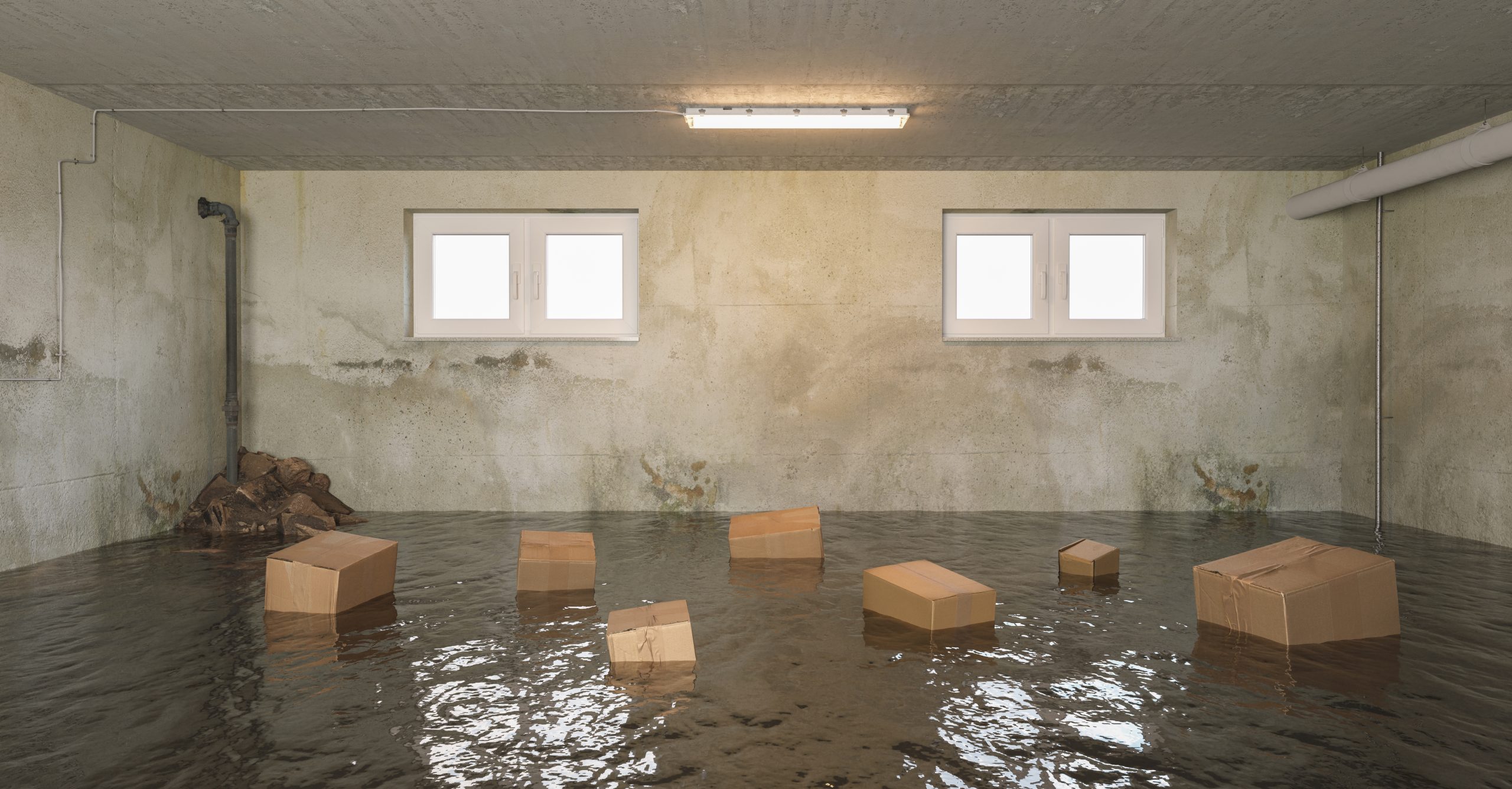
1. Locate and Stop the Water Source
For example, if a plumbing issue is the cause, quickly shut off the water supply at the main valve. This action will help minimize further damage to your home.
If you can’t stop the water supply, minimize the places water can enter your home. Divert water away from sensitive areas, especially electrical outlets and appliances. If you can’t safely reach the breaker box, use a dry, non-conductive object (like a wooden broom handle) to turn off the power. If needed, consider using a tarp or sandbags to redirect the water. The sooner the water source is contained, the less extensive the damage will be.
2. Move Belongings to Safety
With the water source controlled, your next step is to protect your possessions. Water damage can ruin personal items, especially electronics, documents, and furniture. Immediately move any items you can to higher ground or a dry location within your home. If it’s not feasible to move large furniture, place plastic sheeting or aluminum foil under them to keep them from absorbing moisture.
Be especially careful when moving electronic appliances. If you believe any of them may conduct electricity, use a non-conductive surface to move them whenever possible (such as rubber gloves).
3. Document the Damage for Insurance
This documentation will serve as evidence when filing your claim and ensure that you have a record of all damage, which is critical for claims. Take clear, well-lit photographs or videos of the affected areas and damaged belongings. Make sure to capture different angles of affected areas, along with close-up shot of items that are severely damaged.
Do not throw away anything until it’s been properly documented. Even items of medium value may be covered under your insurance policy. Detailed visual evidence helps speed up the claims process and ensures you get an accurate reimbursement for the damages.
Also, if there are any signs of mold or other secondary issues, document these as well, as they can often be worth compensation on their own.
4. Contact Professionals for Cleanup and Restoration
After taking immediate steps to mitigate damage, it’s time to bring in professionals. Water damage restoration can be a complex process that often requires specialized tools and knowledge. Professionals will not only assist in water extraction but will also focus on drying out your home, preventing mold growth, and identifying any hidden issues that could worsen over time.
While you may be able to manage some of the cleanup on your own, such as drying out minor water accumulation or removing excess water with towels, larger-scale efforts should be left to experts. They will have access to high-powered drying equipment and moisture detection tools that can identify hidden moisture in walls, floors, and ceilings. They’ll also be able to test for mold and other hazards that could pose health risks. Restoration experts are trained to prevent long-term issues by ensuring your home is fully dried and properly sanitized.
Additionally, water damage can often lead to structural issues, such as weakened foundations or warped floors. A professional service will assess the structural integrity of your home and help address any issues that may compromise its safety. If the damage is extensive, working with a restoration company ensures that the job is done thoroughly and safely, leaving you with fewer concerns down the line.
Contact Bill’s Plumbing and Sewer online or call us at 847-673-3045 today and get your personalized estimate!
Connect with us


- August 2026
- July 2026
- June 2026
- May 2026
- April 2026
- March 2026
- February 2026
- January 2026
- November 2025
- July 2025
- June 2025
- April 2025
- March 2025
- January 2025
- February 2024
- December 2022
- November 2022
- October 2022
- September 2022
- July 2022
- June 2022
- May 2022
- April 2022
- March 2022
- February 2022
- January 2022
- December 2021
- November 2021
- October 2021
- September 2021
- August 2021
- July 2021
- June 2021
- May 2021
- April 2021
- March 2021
- February 2021
- January 2021
- December 2020
Archives

Fix Clogged Drains & Leaky Faucets With Our Residential & Commercial Plumbing Services In Northbrook, IL
Get A Free Estimate